Lifting a swamp cooler or rooftop unit in Albuquerque
Most Albuquerque cooler and rooftop swaps need a stinger or a small truck crane for half a day. The bill moves with where the truck can park, how far the boom has to reach and whether a lane has to close.
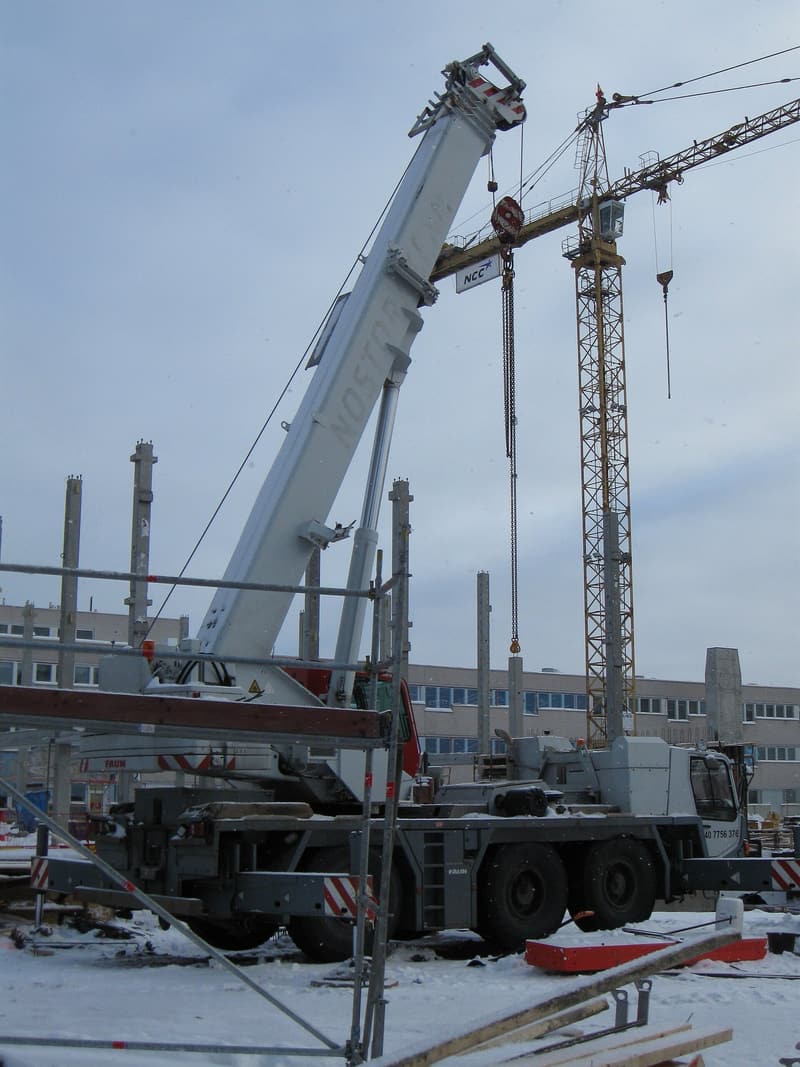
What does a crane cost to set a swamp cooler or rooftop unit in Albuquerque?
On a published rate sheet, a 14.5 to 25-ton truck crane runs $180 to $190 an hour with a 4-hour minimum, plus a 10% fuel charge, so a typical cooler or small unit swap lands near $800 to $840. If the crane takes a lane or a sidewalk inside the city, add a barricading permit from the Department of Municipal Development.
- The reach from the truck to the roof curb decides the crane more than the weight does.
- A crane in a city lane or on a sidewalk needs a DMD barricading permit, applied for 14 calendar days ahead.
- Federal rules keep the crane 10 feet from lines up to 50 kV.
- Spring wind is the usual reason a rooftop lift gets moved to the morning.
Start with the reach
The weight of a cooler or a packaged unit matters, but the distance from the crane to the landing spot matters more. Capacity drops fast as the boom goes out, so the operator measures from the roof stand or curb back to where the truck can park.
- Cooler on a one-story house. The truck in the driveway or at the curb, the stand near the front: a stinger or a 14.5-ton truck crane usually covers it.
- Unit in the middle of a flat roof. A strip center or school roof with the unit 40 feet or more in from the parapet: often a 25 to 40-ton truck crane.
- Uptown, downtown or a tall building. Tighter streets, more traffic and taller roofs can mean a bigger crane and a closed lane.
Send the cooler or unit model, a photo of the roof stand and a photo of where the truck could park.
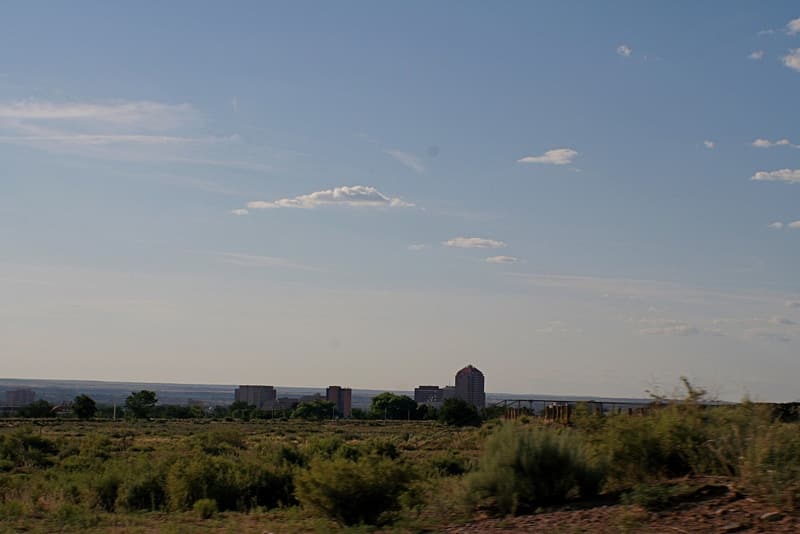


When the truck has to use the street
A crane parked in a driveway or a lot just sets up and lifts. Once it or its barricades take a lane or a sidewalk inside Albuquerque, the city gets involved:
- Barricading permit. Issued by the Department of Municipal Development. Apply at least 14 calendar days before the work, and do not start until the permit is approved.
- Traffic control plan. Streets posted at 30 mph or more need a plan drawn for that site by a traffic control supervisor, a design specialist or an engineer. Under 25 mph, and sidewalk-only closures, usually do not.
- Rio Rancho and other towns. Each runs its own streets. Rio Rancho wants its traffic plan 7 business days ahead.
Lines, wind and the calendar
Federal rules keep the crane and the load at least 10 feet from lines up to 50 kV, with more distance for higher voltages. Many older Albuquerque blocks have service lines along the alley, so mention them.
April and May are the windiest months in New Mexico, with March and June close behind. A cooler is a big, light box that catches wind, so spring lifts often start early. Watch the overtime line if the crew starts before 6 a.m.
Cooler season starts in late spring, and that is when change-out calls stack up. Booking a few weeks ahead in April helps.
Rough numbers for a rooftop lift
| Job | Machine | Rough bill with 10% fuel |
|---|---|---|
| Swamp cooler on a one-story house | 14.5-ton truck crane, 4 hours | $792 |
| Packaged unit on a strip center | 25-ton truck crane, 4 hours | $836 |
| Heavier unit with a long reach | 40-ton truck crane, 5 hours | $1,100 |
These come from the published rates. Drive time beyond the minimum, overtime and a rigger are extra.
Other questions
Can a crane take the old cooler down and set the new one in one trip?
Yes, that is the usual way. The crew disconnects the old cooler, the crane lowers it to the ground or a trailer, then lifts the new one onto the stand. Ask for both picks in the same visit so you pay one minimum.
Who pulls the barricading permit?
Usually the mechanical contractor or the crane company. The city asks for the application at least 14 calendar days ahead, and streets posted at 30 mph or more need a site-specific traffic control plan.
What if the house is behind a block wall?
The crane can often reach over a wall from the street, but the reach grows and so may the crane size. Measure from the curb to the cooler stand and send a photo from the street.
Where the Albuquerque numbers come from
- City of Albuquerque, barricading and excavation permitting
- OSHA 29 CFR 1926.1408, power line safety
- NWS Albuquerque, high wind climatology
- Advanced Crane, published rate sheet
Have this lift priced by a New Mexico operator
A rough description is plenty.
Keep reading
-
 Albuquerque truck crane and stinger rates
A posted rate sheet from 14.5 to 100 tons, the 4-hour minimum, the fuel surcharge and early-start overtime.
-
 Setting roof trusses on a new Albuquerque house
Craning trusses onto a new Albuquerque home: truck crane size by reach, flat and pitched roofs, West Side lots, staging the delivery and published rates.
-
 Taking down a big cottonwood in Albuquerque with a crane
Crane-assisted tree removal in Albuquerque: the City Forester rule for street trees, block walls and alleys, power line distance, wind and posted rates.